“Rare,” “large tumor,” “rapid progression,” “fast recurrence,” “highly metastatic”… these are the words Nuru (pseudonym) uses to describe her condition.
In her early forties, Nuru is from Malaysia. In January 2025, she sought medical attention at a local hospital due to persistent cough and fever. An X-ray revealed a mass in her right lung, and a biopsy confirmed poorly differentiated non-small cell carcinoma. She underwent a right upper lobectomy, but the postoperative pathology revealed a more troubling truth: poorly differentiated carcinoma with pleomorphic and sarcomatoid components.
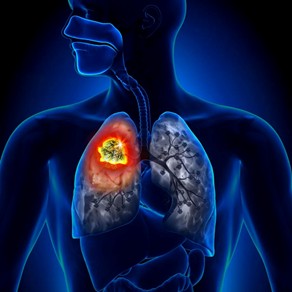
This was no ordinary lung cancer.
Pulmonary sarcomatoid carcinoma (PSC) is an extremely rare subtype of non-small cell lung cancer, accounting for only 0.1%–0.5% of all lung malignancies. It typically presents with larger tumors, often showing hemorrhage and necrosis on section, with a fish-flesh appearance. It progresses rapidly and is highly prone to recurrence and metastasis — Nuru’s subsequent experience would tragically mirror this description.
After surgery, her PD-L1 test showed a TPS of 35%, and she underwent five cycles of immunotherapy. However, in April 2025, a PET-CT scan revealed tumor recurrence, with the largest lesion measuring 7 cm and multiple lymph node metastases. Genetic testing also indicated a SMARCA4-deficient mutation — found in approximately 5–10% of non-small cell lung cancers and typically associated with poor prognosis.
This made Nuru realize that cancer was not so easily defeated.
Still, she did not give up. She tried radiotherapy and immunotherapy, but the tumor grew aggressively, reaching a maximum diameter of 15.7 cm, invading the ribs, and causing superior vena cava syndrome. Local doctors were left with no options and concluded she had “only three months to live.”
Even more heartbreaking, due to the severity of her condition, she was refused admission by multiple hospitals. Even when admitted, she was only offered palliative care to relieve symptoms, rather than active anti-tumor treatment.
“Is this really the end?”
She sought medical help everywhere. She learned that other patients had been treated at Fuda Cancer Hospital in Guangzhou, China, and some doctors also recommended she try Fuda’s approach. After multiple online consultations, Nuru got in touch with the medical team at Fuda. Holding onto a glimmer of hope, she decided to come to China.
“Extremely thin, almost skin and bones, unable to walk…” — this was the first impression of Nuru by the medical staff at Fuda. At that time, she weighed just over 30 kg, and the tumor in her lung had grown to 17.6 cm.
Nuru was already in the advanced stage of lung cancer with multiple metastases throughout her body. Surgery was no longer an option, and treatment focused primarily on palliative care. After multidisciplinary consultation and comprehensive evaluation, the Fuda First Medical Department formulated a personalized treatment plan:
Arterial infusion chemotherapy: Delivering drugs directly into the arteries supplying the tumor, achieving a much higher local concentration than systemic intravenous chemotherapy. Nuru remarked, “In our country, interventional therapy is only used for the liver, but at Fuda, it's applied in many areas.”
Combination immunotherapy + anti-angiogenic therapy: Inhibiting the formation of new blood vessels in tumors, improving the tumor microenvironment, and enhancing immune response.
After several treatment cycles, Nuru’s symptoms — cough, shortness of breath, and persistent fever — improved significantly. The tumor in her right lung shrank compared to before, and the treatment response was evaluated as SD (stable disease). Her weight increased from just over 30 kg to 48 kg. From being bedridden, she now feels that returning to jogging is within reach. “After returning home, other doctors were surprised by my recovery.”
Nuru admitted that she had consulted other overseas medical institutions, but many claimed to offer “miracle treatments” without providing concrete treatment plans. She pointed out two key reasons why choosing Fuda was the right decision:
First, Fuda did not refuse her despite her critical condition, giving her hope to live;
Second, since her diagnosis, the first positive treatment results she heard came from Fuda.
What touched her most was the consistent warmth of the medical staff: “They never say discouraging words,” always greet her with smiles, and clearly explain and adjust every step of treatment, keeping her informed about her condition at all times.
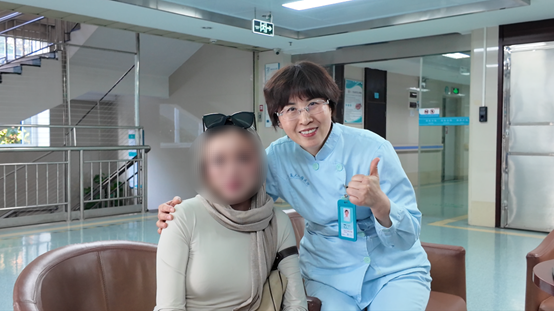
Today, Nuru is still undergoing systemic anti-tumor therapy. However, she is no longer fixated on “completely eliminating cancer,” but has learned to live with it. From being told she had only three months to live to regaining hope of jogging again, her journey has been incredibly difficult — but she is no longer alone.
We believe she will continue to improve.