


When the lump in her breast kept growing and the skin began to ulcerate and bleed, Ora’s first reaction was not to visit a hospital, but to draw up a will. It all stemmed from a deep-seated fear of hospitals and an instinctive resistance to modern medicine.
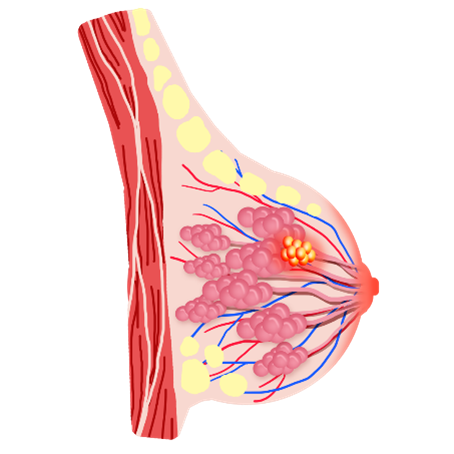
Ora is an elegant, composed Thai woman, but over a year ago, a lump that silently appeared in her left breast shattered the peace of her life. Initially, she dismissed it as a minor issue. As days passed, however, her condition took a sharp turn for the worse: discharge began leaking from the nipple, the mass grew relentlessly, the skin ulcerated and bled, and several small lumps emerged in her left armpit, aching faintly...
Even then, Ora still refused to step into a hospital. She opted to dress the wound herself and take traditional Chinese herbal medicine. In her mind, modern cancer treatment meant massive doses of drugs, severe side effects, and the painful memory of acquaintances who had passed away mid-treatment. These fears stacked up into an insurmountable wall. Terrified that the cure might be more agonizing than the disease itself, she gave up, wrote her will, and hid both her wounds and her terror from her husband.
Yet she was not truly alone. Seeing the deep concern in her family’s eyes, her stubborn resolve finally wavered. She began looking for new possibilities. One day, Ora and her husband came across reports about Guangzhou Fuda Cancer Hospital in China, reading firsthand accounts from other patients. After extensive research, she contacted the doctors at the hospital’s Thailand office.
"I learned that their philosophy focuses on minimally invasive, gentle treatments with relatively mild side effects, and that they specialize in oncology," she recalled. Skeptical yet hopeful, she packed her bags within two days and flew to China. She thought to herself: Why not give it a shot? At worst, nothing comes of it.
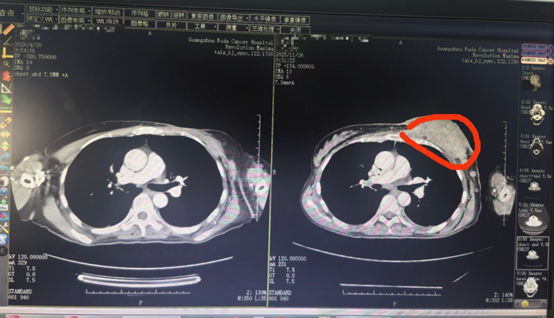
In November 2025, Ora walked into Guangzhou Fuda Cancer Hospital for the first time. At that point, her left breast and surrounding skin suffered large-scale ulceration, tissue loss, erythema, and continuous exudation of blood and fluid. Her pain worsened at night, and multiple lymph nodes in her armpit were swollen. To her shock, the diagnostic findings revealed far more than a localized tumor: the cancer had already metastasized to her lungs, bones, and lymph nodes, and her open wound was complicated by a multidrug-resistant bacterial infection.
Instead of backing away, Ora found unexpected strength. The medical team listened patiently to her concerns, addressed every question thoroughly, and worked in seamless harmony. Their calm composure and confidence served as a warm, steady anchor, gradually lifting her spirits from despair.
Faced with Ora’s complex condition, the team promptly organized a multidisciplinary consultation (MDT). The priority was wound debridement, dressing changes, pain management, and anti-infection therapy. Next, to determine the pathological profile, they performed a core needle biopsy on the left breast mass. Intraoperative frozen pathology confirmed malignant cells, followed immediately by palliative cryoablation to relieve local symptoms. Postoperative pathology provided further clarity: invasive ductal carcinoma of the left breast, ER (++), HER2 (+++), PR (-). Based on this, the team tailored a personalized targeted therapy combined with chemotherapy to control systemic disease progression.
"I didn't suffer from nausea or vomiting, nor did I have severe rashes or allergies. I could eat normally," Ora shared. Having feared chemotherapy side effects above all else, she experienced almost none of her anticipated nightmares. That was because she did not receive conventional systemic chemotherapy; instead, she underwent interventional intra-arterial infusion chemotherapy. Guided by medical imaging, the medication was delivered directly into the tumor's feeding arteries, concentrating high-potency drugs at the core of the "battlefield" while sparing the rest of her body. Supported by meticulous preventative care from the nursing staff, she was spared the physical torment she had dreaded.
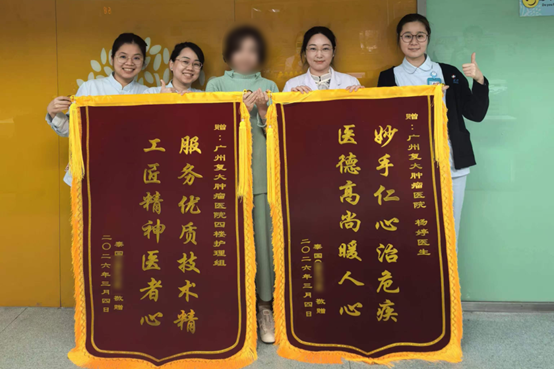
After six cycles of treatment, Ora’s breast lesion shrank substantially, and the metastases in her lungs, lymph nodes, and bones were brought under control. Follow-up scans demonstrated robust systemic tumor control, earning an overall evaluation of PR (Partial Response), with maintenance targeted therapy scheduled ahead. Even more striking than the CT scans was the once-shocking breast wound, which gradually closed and healed under dedicated care. Upon returning to Thailand, local medical personnel were astonished: typically, such severe wounds take at least a year to heal, yet hers took only five months. Today, she carries a bright glow on her face and newfound hope in her heart.
"Before coming, I was full of doubts. After arriving, I felt a whole new window open, witnessing the power of precision medicine," Ora reflected. In her eyes, the Fuda medical team never stuck rigidly to routine formulas; they truly placed her at the center, dynamically adjusting treatment based on every physiological change and bodily response. To her, this journey went beyond medical treatment—it felt like warm, steadfast companionship. Each time she returned to Fuda, it felt less like visiting a hospital and more like seeing old friends.
Surrounded by warmth, her days passed quietly, and her outlook grew brighter. She felt profoundly grateful for the choice she made. Above all, she was grateful that she never had to walk alone—lifted by a professional, compassionate team, she journeyed through the darkest night and stepped into her own dawn.

